Cooking
Sourdough Discard Aloo Naan
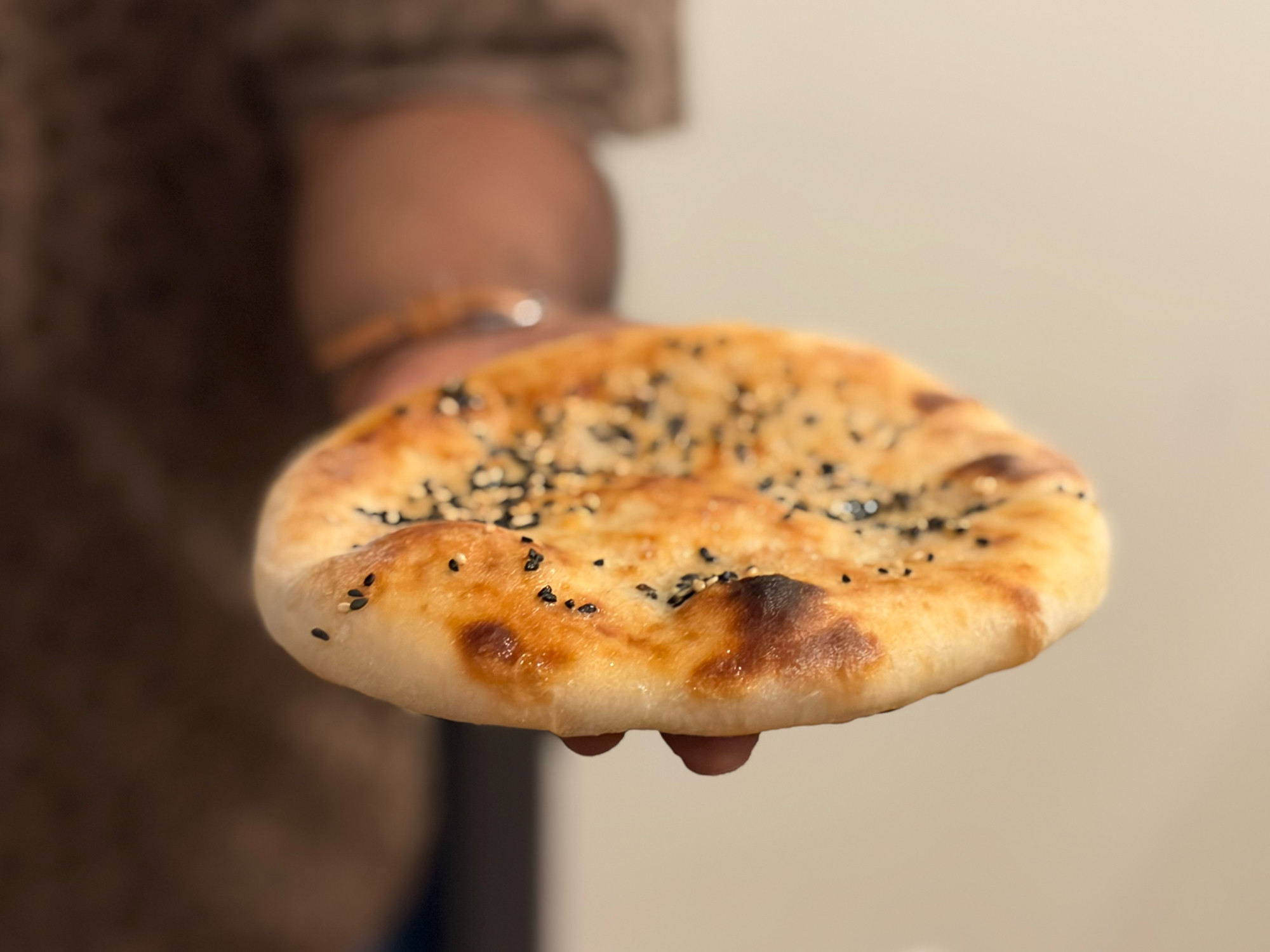
This week’s starter feeding left me with discard, and instead of tossing it, it went into naan. This is an enriched, yeasted dough, so the discard isn’t doing any leavening here, it’s there for flavor and a bit of tang. The instant yeast and baking powder do the actual lifting.
Naan Dough
- bread flour
- sourdough discard
- dahi (yogurt)
- lukewarm water (start with 100 g)
- milk powder (about 3 tbsp)
- instant yeast
- sugar
- salt
- baking powder
- olive oil (melted butter also works)
Adding the discard changes the hydration a little compared to a plain enriched dough, so hold back some of the water at first. Start with 100 g, mix, and only add more up to 120 g if the dough still feels stiff. Your discard’s own hydration will decide how much you need.
Choor Choor Aloo Filling
- medium potatoes, boiled and completely cooled
- green chilies, finely chopped (optional, skip for kids)
- fresh cilantro, chopped
- roasted cumin powder
- coriander powder
- red chili powder (optional)
- ½ tsp amchur or 1 tsp lemon juice
- salt, or to taste
- kasuri methi, crushed (optional, but adds a lot of flavor)
I also add a pinch each of black salt, fennel (saunf) powder, and a chunky chaat masala. None of these are essential, but they push the filling closer to a proper chaat flavor.
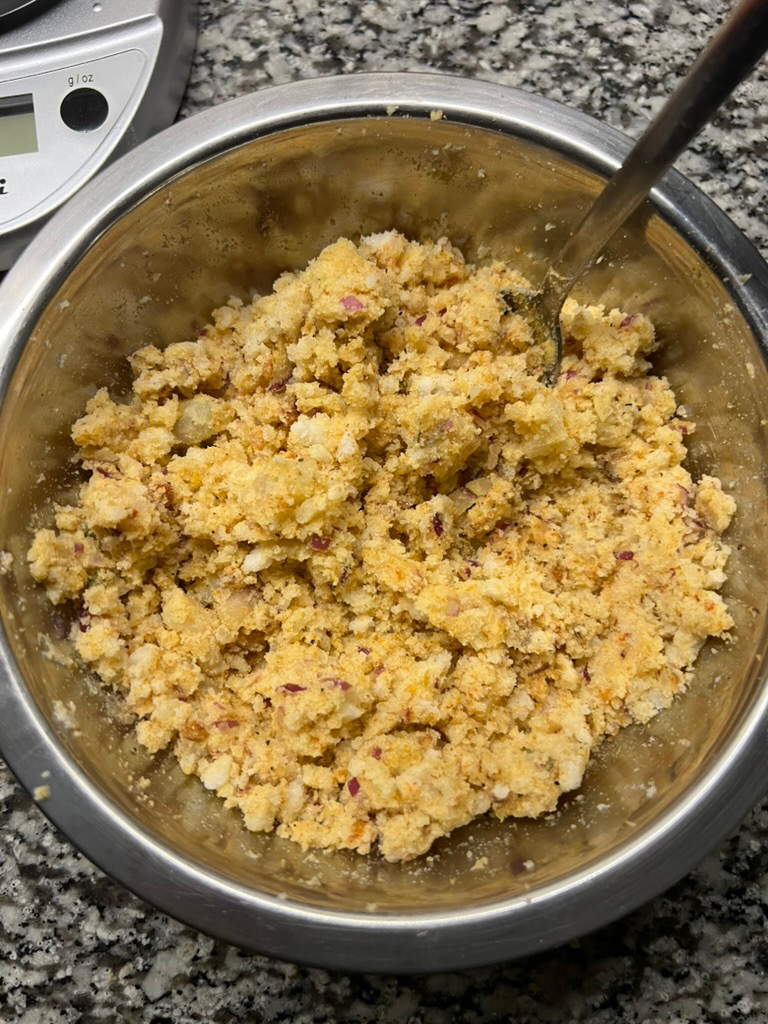
Peel the cooled potatoes and crumble them by hand or a fork, don’t mash them smooth. You want a dry, crumbly, choor choor texture, not a paste. Mix in everything else.
The most important thing here: the filling has to be completely dry. If the potato is at all wet, the naan will tear open in the oven.
Method
1. Mix and rise
Whisk the yogurt, water, milk powder, sugar, and yeast together first. Add the flour, discard, salt, baking powder, and oil, and mix until it comes together into a shaggy dough. Knead for 8 to 10 minutes until smooth and a little tacky. Cover and let it rise for 2 hours, or until noticeably puffed.
2. Divide
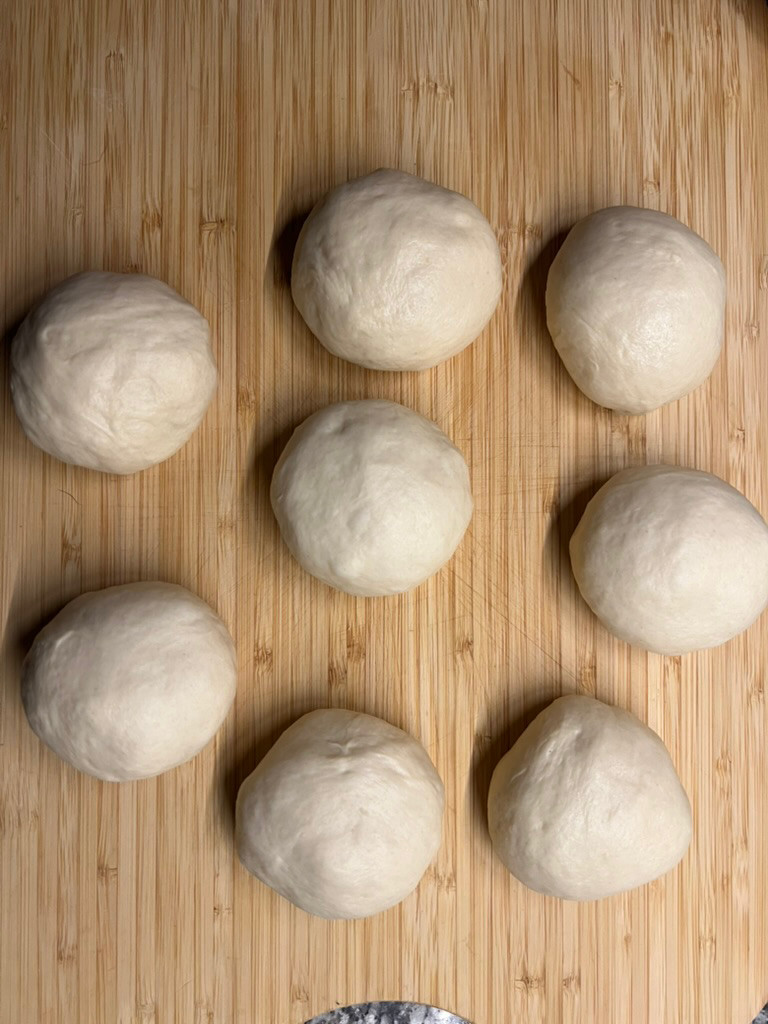
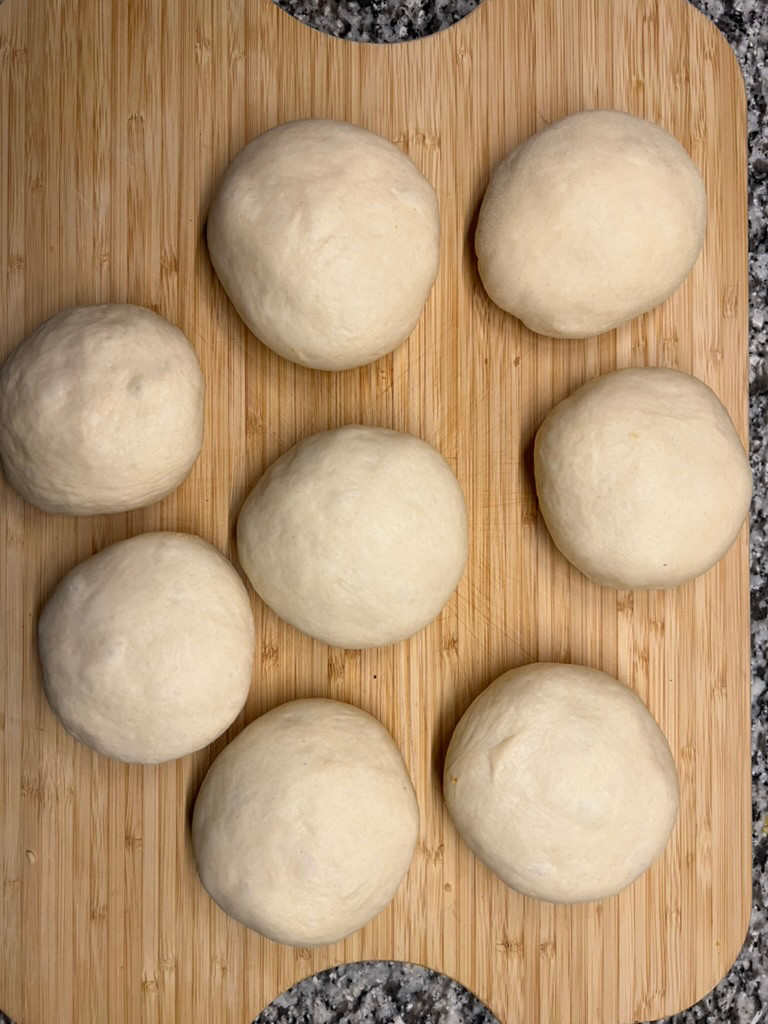
Turn the dough out and divide it into 8 equal balls. Let them rest, covered, for 15 to 20 minutes before stuffing.
3. Stuff
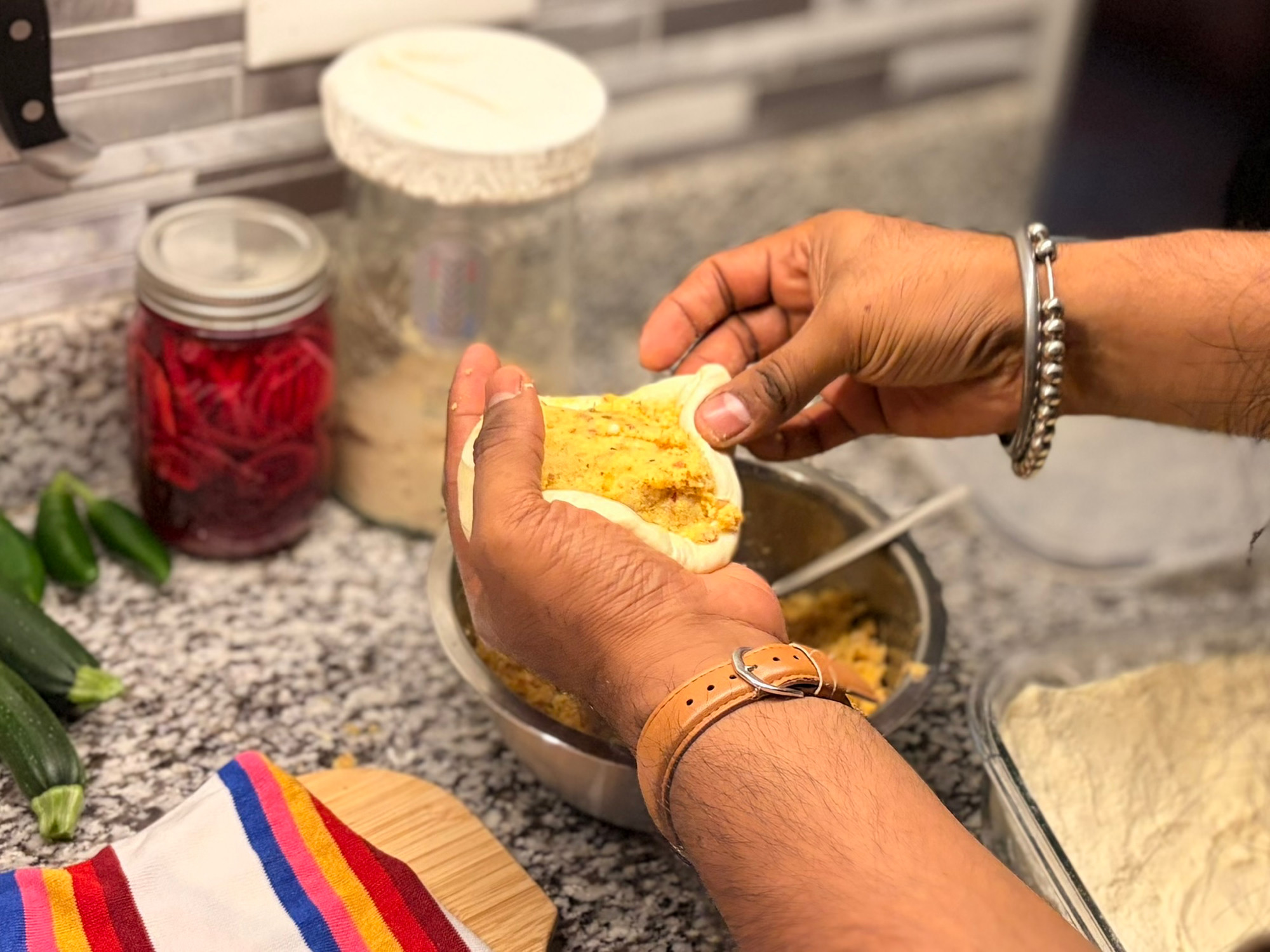
Roll each ball out to a 4 to 5 inch round. Place 2 to 3 tablespoons of filling in the center.
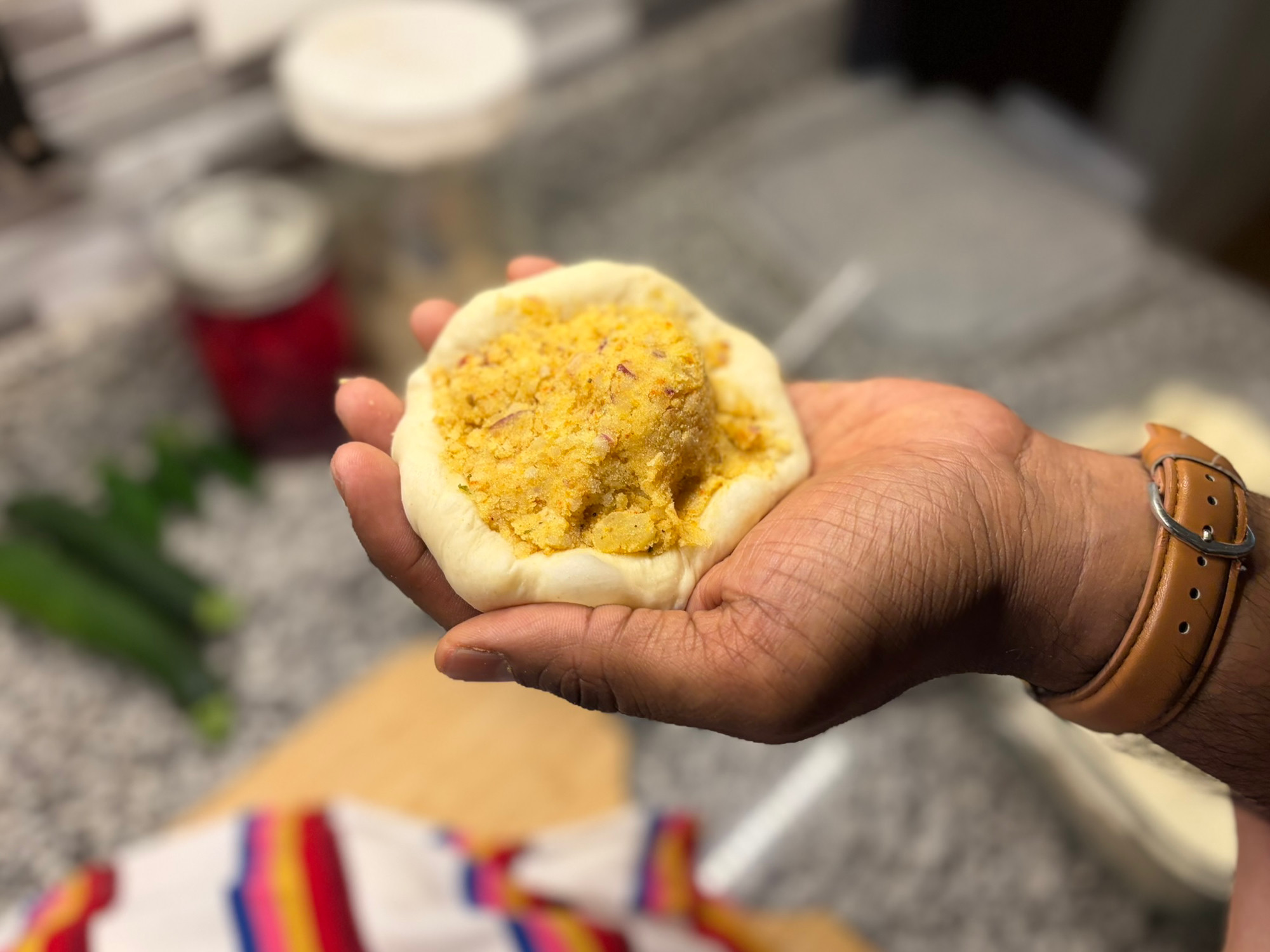
Bring the edges up and over the filling and pinch them together tightly to seal. If the filling starts to push through anywhere, dust that spot with a little dry flour and reseal.
4. Rest again
Let the sealed balls rest, seam side down, for 5 minutes.
5. Roll and bake
With a light hand, roll each ball out into a 6 to 7 inch oval, so you don’t tear the seal or push the filling out unevenly. If you want toppings, brush the top lightly with water and sprinkle on white and black sesame seeds, or nigella seeds, before baking.
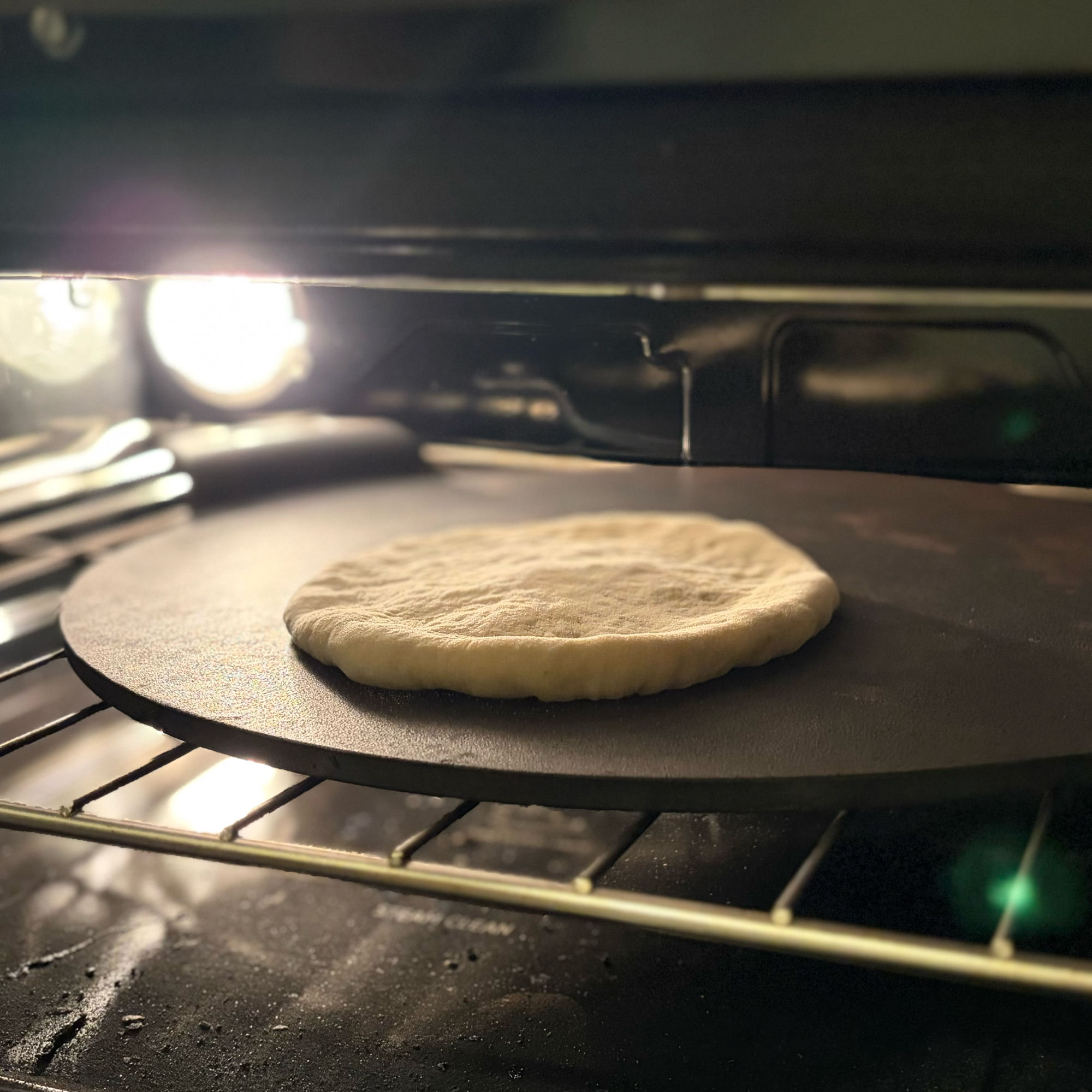
Bake in a regular oven at 500°F for 5 minutes.
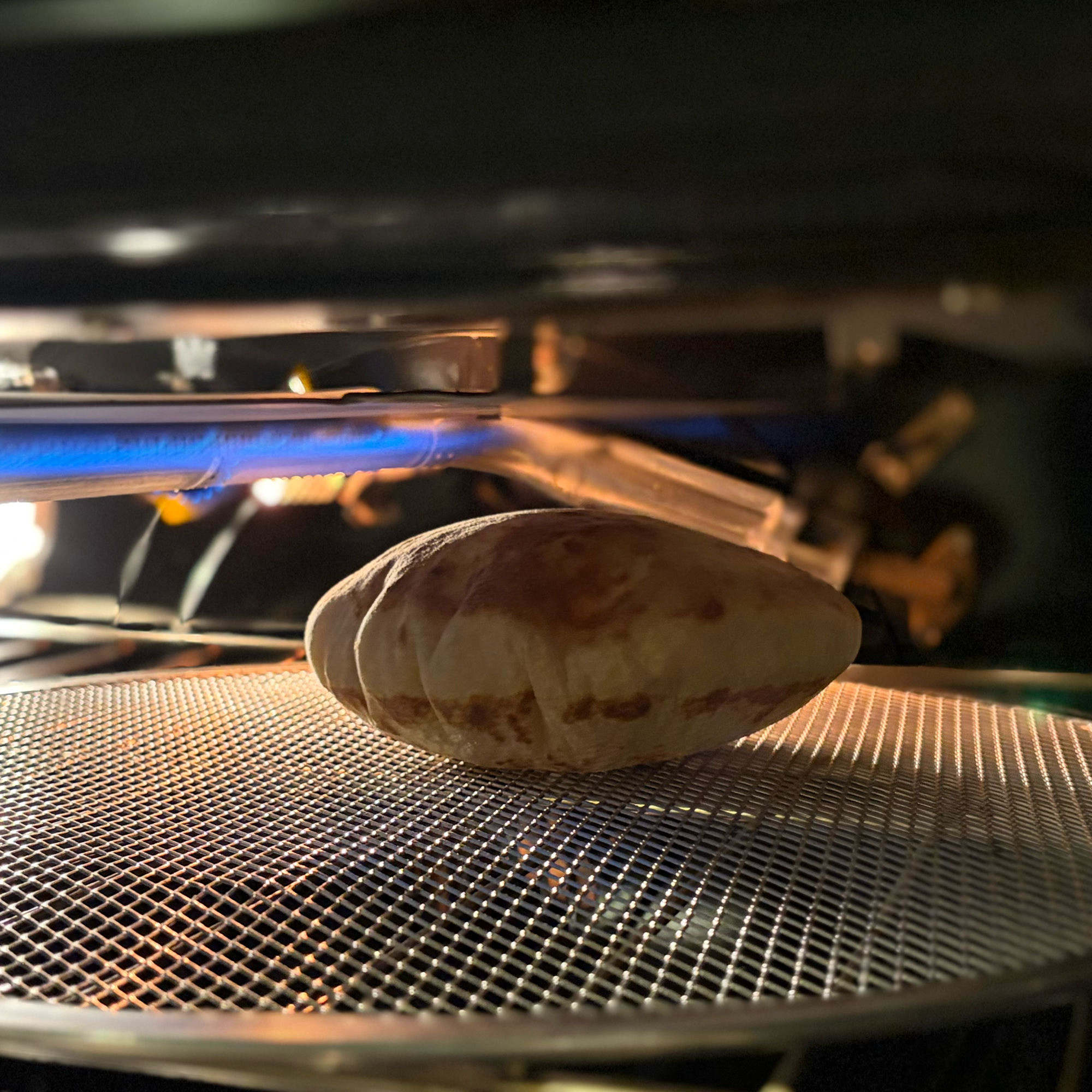
Then switch to the broiler for 1 to 2 minutes to get the char spots.
Notes
- Dry filling, every time. This is worth repeating: any moisture in the aloo mixture and the naan splits open at the seams during the high-heat bake.
- Don’t skip the rests. Both the 15 to 20 minute rest before stuffing and the 5 minute rest after sealing relax the gluten so the dough doesn’t fight you when you roll it thin.
- A good excuse to keep feeding your starter instead of dumping the discard.